Your Cart is Empty


Design Software History: Historical Evolution of Textile Design Software: From Manual Craftsmanship to Digital Precision and Innovation
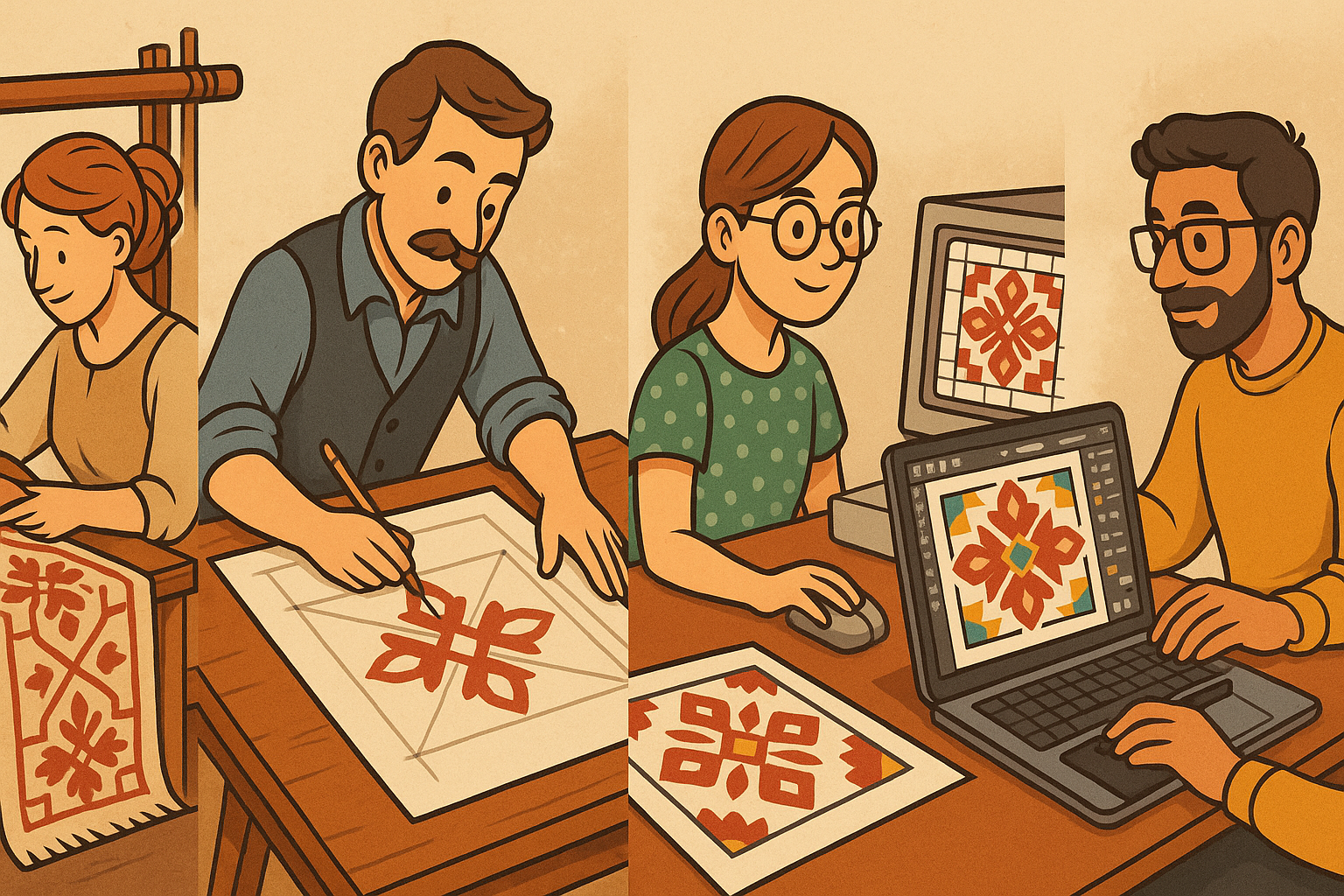


Historical Foundations and Early Developments
The evolution of textile design software can be traced back to the origins of textile design itself, where early human civilizations developed intricate dyeing and printing techniques. In ancient times, artisans employed natural pigments and rudimentary tools to create patterns and motifs on fabrics, gradually evolving into more refined methods over centuries. The early traditions of textile production in regions such as India, China, and the Middle East laid the groundwork for the complex processes we see today. These early practices, while deeply artistic and culturally significant, were chiefly manual and based on observational and experimental methods. The transition from these ancient manual techniques to a modern digital approach has been both fascinating and transformative. As the need for precision grew, particularly in industrial textile production, the limitations of manual dyeing and printing became increasingly evident, thereby necessitating a shift toward computational approaches capable of maintaining consistency and scalability in production.
Origins of Textile Design Traditions
Historically, natural resources and environmental conditions dictated how textiles were designed and produced. For example, communities in ancient India relied on locally sourced indigo and madder plants to produce a wide array of dye colors, while regions in China were famed for their delicate silk arts using organic dyes. These early innovations were both culturally reflective and technically ingenious. Artisans combined empirical observation with experimental techniques, sometimes inventing proprietary methods passed down through generations. The methods used not only defined the aesthetic of a culture but also established a foundational need for accuracy, color fidelity, and pattern replication—requirements that laid the conceptual framework for later computational innovations. The steadily increasing complexity and variability in textile motifs eventually outgrew the capabilities of manual reproduction, creating a distinctive demand for technologies that could replicate intricate patterns with exact precision. This transition from craft to science marked the beginning of a long journey that would eventually see computers assisting in the analysis and reproduction of detailed textile designs.Emergence of Digital Precision in Textile Production
With the onset of the Industrial Revolution, textile production experienced a profound shift, as mechanization began to take center stage. The move towards mechanized production introduced challenges in maintaining quality consistency, which could only be met through greater precision in printing and dyeing methods. By the mid-20th century, academics and engineers recognized that the inherent variability of hand-dyed fabrics required more precise control over color reproduction and pattern layout. Early experimental methods in computer-aided design (CAD) gradually emerged to address these issues. Pioneers in the field began developing algorithms to simulate dye diffusion and fabric behavior under various conditions, enabling more uniform outcomes in digital prints. **Digital precision**, as an idea, revolutionized the industry by allowing designers to tweak patterns and colors in a virtual environment before committing to production, thereby minimizing waste and improving both the efficiency and the quality of textile manufacturing. Early ventures by innovators in computing laid the groundwork for what would later evolve into sophisticated textile design software, setting the stage for further technological breakthroughs and integration with other industrial processes.Early Computational and Experimental Methods
The integration of computational methods into textile design was not abrupt but rather a gradual evolution influenced by both technological progress and market needs. Innovators in the computing industry began experimenting with early digital tools that could handle design processes traditionally done by hand. In academic settings and research labs, prototypes of computer-aided design systems were developed to simulate dye interactions and pattern generation. Notable among these early experiments was the development of basic algorithms that could predict color outcomes based on chemical reactions inherent in the dyeing process. These experiments were critical in offering a conceptual leap forward—from static, manually controlled processes to dynamic, digitally enhanced systems. The early software often supported basic functionalities such as pattern replication, color matching, and the application of various printing techniques. During this period, researchers used simple programming languages to script design algorithms, laying the very first lines of code that eventually evolved into robust textile design software. This blend of traditional artistry with computational science marked a significant turning point in the textile industry, moving it beyond mere manual reproduction into the realm of **digital innovation**.Technological Milestones and Software Innovations
The journey from primitive digital experiments to sophisticated design software was marked by numerous critical breakthroughs in computational modeling, image processing, and pattern generation. One of the foremost challenges for early developers was creating accurate simulations of dye behavior and color reproduction. As textile production scaled up to meet industrial demands, precision became paramount. Engineers and computer scientists established mathematical models to analyze the diffusion and absorption of dyes on various fabric textures. These developments not only improved production quality but also played a pivotal role in the evolution of digital textile printing. The relentless pursuit of enhanced capabilities spurred significant innovations in both hardware and software, setting the stage for an integrated digital design ecosystem. Early computer-aided design tools paved the way for today's advanced applications, which now incorporate techniques such as 3D imaging and high-definition pattern mapping. Notable companies and individuals contributed to these advancements by merging principles of computational geometry, physics, and color theory into practical solutions.
Advances in Computational Modeling for Dye and Color
One of the primary technological milestones was the development of robust computational models for simulating the behavior of dyes on fabrics. These models were essential for predicting how colors would interact with different textiles under varying environmental conditions. Key innovations in this area included the application of fluid dynamics and thermodynamics to model the diffusion of dyes. Researchers developed a series of algorithms that took into account not only the physical properties of the dyes but also the chemical composition of the fabric materials. Such models allowed for a more accurate reproduction of colors and gradients, enhancing the reliability of digital design software. The incorporation of these mathematical models into design tools enabled designers to adjust parameters in real time and experiment with different dyes and patterns without the need for physical prototypes. The overall impact of these advancements can be summarized with the following bullet points:- Enhanced simulation of dye diffusion processes
- Accurate prediction of color outcomes under diverse conditions
- Real-time adjustments in digital simulations
- Improved consistency and precision in textile production
Innovations in Image Processing and Pattern Generation
As digital design software matured, further strides were made in the fields of image processing and pattern generation. The evolution of high-resolution imaging technologies allowed designers to capture and manipulate textures and patterns with a level of detail previously unattainable in the textile industry. Algorithms improved to handle complex pattern geometries, scaling techniques, and color balancing, ensuring that digital representations were as close to their physical counterparts as possible. The technological evolution was rapid, with each breakthrough providing the industry with powerful tools to refine designs. Software innovations introduced the ability to layer digital patterns, simulate various printing techniques, and even adjust for fabric stretch and embellishments. These advancements, coupled with the relentless efforts of software companies around the globe, contributed to a transformative phase in the industry. Pioneering firms such as Gerber Technology, Lectra, and EFI played crucial roles by developing platforms that integrated robust image processing capabilities with intuitive design interfaces. Such innovations have become the backbone of modern textile design workflows, enabling designers to create intricate, high-quality fabrics with enhanced durability and visual appeal.Role of Influential Software Tools and Companies
The era of digital transformation in textile design was propelled forward by influential software tools and the industry pioneers behind them. Companies like Gerber Technology, Lectra, and EFI have had lasting impacts on both the design and manufacturing aspects of the textile sector. These companies introduced integrated solutions that combined pattern design, color management, and production planning into single software suites. Their development of high-fidelity software tools revolutionized the design processes, reducing lead times and minimizing production waste. Moreover, their innovations spurred widespread adoption of computer-aided design throughout the industry. The collaborative efforts of computer scientists, textile engineers, and software developers led to the emergence of user-friendly platforms that continue to evolve in response to industry demands. The following key points summarize their contributions:- Convergence of CAD technologies with textile design requirements
- Creation of high-resolution imaging and pattern generation features
- Introduction of real-time editing and adjustable simulation parameters
- Establishment of industry standards for digital textile production
Impact on the Textile Industry and Modern Applications
The integration of digital design software has fundamentally transformed the textile industry by introducing levels of precision, consistency, and creativity that were unimaginable mere decades ago. The advent of these advanced tools directly addressed the enduring challenges associated with traditional fabric dyeing and printing processes. Manufacturers and designers alike began to leverage the capabilities of digital simulations to optimize color matching, design replication, and pattern alignment. One of the most profound impacts was observed in the realm of modern digital textile printing, where these innovations have drastically reduced production errors and material waste. As advanced software began to seamlessly integrate with production hardware—such as digital printers and automated cutting machines—the efficiency of textile manufacturing improved considerably. This digital revolution also facilitated a move towards sustainable production practices, as fabrics could now be designed with minimal environmental impact. The transformation was driven by influential software systems that enabled real-time adjustments and accurate previewing of how fabrics would appear post-production. In the modern textile landscape, the role of digital design is not only to enhance aesthetic appeal but also to streamline manufacturing processes and foster a more sustainable industry.
Transformation of Traditional Textile Dyeing and Printing
Traditional textile dyeing and printing methods, for centuries known for their artisanal quality, faced significant challenges in adapting to high-volume production demands. With the introduction of digital design software, industries rapidly moved towards processes that ensured both high fidelity and throughput. By using digital approaches, manufacturers were able to overcome inconsistencies inherent in hand-run processes. This digital shift enabled the automation of pattern replication and dye application, drastically reducing human error. Innovations in software allowed designers to experiment with multiple color palettes and motifs before finalizing a design, which proved invaluable in an era where customization and fast turnaround times became key market drivers. Several major textile production houses experienced transformative improvements by adopting these advanced tools:- Reduction in production lead times
- Enhanced reproducibility of high-quality patterns
- Integration of automated quality control checks
- Increased flexibility in design modifications and innovation
Integration with Modern Digital Textile Printing and Sustainability
The advent of modern digital textile printing techniques revolutionized how fabrics are produced, economically and environmentally. Advanced design software now integrates seamlessly with digital printing technologies, ensuring that every nuance of color and texture is faithfully reproduced on fabric. This synergy between software and hardware has led to notable advancements in production efficiency and environmental sustainability. Digital textile printing allows manufacturers to produce only the required quantity of textiles on demand, minimizing waste and reducing the consumption of water and chemicals often associated with traditional dyeing processes. Moreover, these digital methods enable meticulous adjustments in real time—such as calibrating color intensity and pattern density—before initiating full-scale production. The result is a highly adaptable production system that meets industry trends while remaining sensitive to environmental concerns. In addition, the software platforms incorporate eco-friendly design principles and provide options for sustainable material selection, which are particularly important in today’s rapidly evolving market trends. The capabilities of modern digital tools can be summarized in the following core benefits:- On-demand production reducing overall waste
- Precise color calibration and reproduction technologies
- Integration of advanced sustainability metrics
- Enhanced control over automated printing processes
Enhancing Efficiency, Consistency and Creativity Through Software
The pervasive impact of digital design software extends far beyond improved production metrics—it has redefined the creative process in textile design. Automation and advanced digital tools have allowed designers to visualize and tweak their work with unprecedented fidelity. Software now offers robust libraries of textures, patterns, and color palettes, enabling designers to explore a multitude of creative avenues without the constraints of manual trial and error. Enhanced features in modern software platforms allow for meticulous simulation of fabric behavior under various lighting and motion conditions, ensuring that the final products are both aesthetically pleasing and functionally sound. The following fundamental points highlight these improvements:- Streamlined workflows in creative design and production
- Greater consistency in color and pattern reproduction
- Advanced automation tools that boost productivity
- Heightened scope for experimental and innovative design outputs
Conclusion
The historical arc of textile design software represents a fascinating journey—from the time-honored traditions of hand-dyed fabrics to the advanced digital methodologies that define today’s industry. The transformation was driven by the constant interplay between traditional craftsmanship and modern technological advancements. Early limitations in manual techniques prompted the exploration for computational solutions that could simulate complex dye behavior and pattern replication accurately. Over decades, as engineers and computer scientists developed new mathematical models, image processing techniques, and user-friendly design tools, the textile industry found new ways to harness **digital precision** and **innovative creativity**. This evolution has led—and continues to lead—to transformative changes in the ways textiles are designed, produced, and conceptualized.
Reflection on the Journey from Manual to Digital
The significant progression from manual methods to state-of-the-art digital design systems is a testament to the synergy between human ingenuity and technological advancement. In the early phases of textile production, every pattern, dye, and print was the result of labor-intensive, handcrafted processes, which, though rich in artistry, suffered from inherent inconsistencies. As demand for more reliable and reproducible designs grew, engineers guided by practical necessities began exploring computational methods that could recreate the intricate details of traditional art with the precision required for modern manufacturing. Today, the legacy of these early experiments is evident in the powerful software applications that drive textile design, providing an unprecedented level of creative control, speed, and efficiency. The long journey from purely manual techniques to sophisticated, computer-aided processes illustrates not only an evolution in technology but also an enduring commitment to enhancing the quality and sustainability of textile production. The digital transformation encapsulates key themes of innovation, precision, and the relentless pursuit of excellence.Outlook on Future Trends and Potential Developments
Looking forward, the direction of textile design software is poised to push the boundaries of what can be achieved within the industry. Future trends indicate a continued emphasis on integrating advanced computational techniques such as artificial intelligence and machine learning to further optimize design processes. Expected developments include deeper integration between design software and automated production lines, ensuring that every stage—from initial design to final printing—is finely tuned to deliver peak performance and sustainability. Additionally, as consumer demands lean towards customization, software tools will likely evolve to support mass personalization, enabling bespoke textile designs on a scale that maintains efficiency without sacrificing quality. Another promising area is the potential for augmented reality and immersive visualization techniques to provide designers with real-time, three-dimensional experiences of their fabric designs long before production starts. This not only enhances creative freedom but also minimizes risks and material wastage early in the process. The anticipated future benefits can be summarized as follows:- Integration of AI-driven design assistance
- Enhanced connectivity between design and automated production systems
- Improved personalization capabilities for bespoke textile production
- Adoption of augmented reality for immersive design visualization
Also in Design News