Your Cart is Empty


Design Software History: Early Innovations in Digital Animation: Tracing the Evolution from Hand-Drawn Techniques to Advanced Character Modeling Software


Early Beginnings in Digital Animation Character Modeling: Foundations of Digital Animation
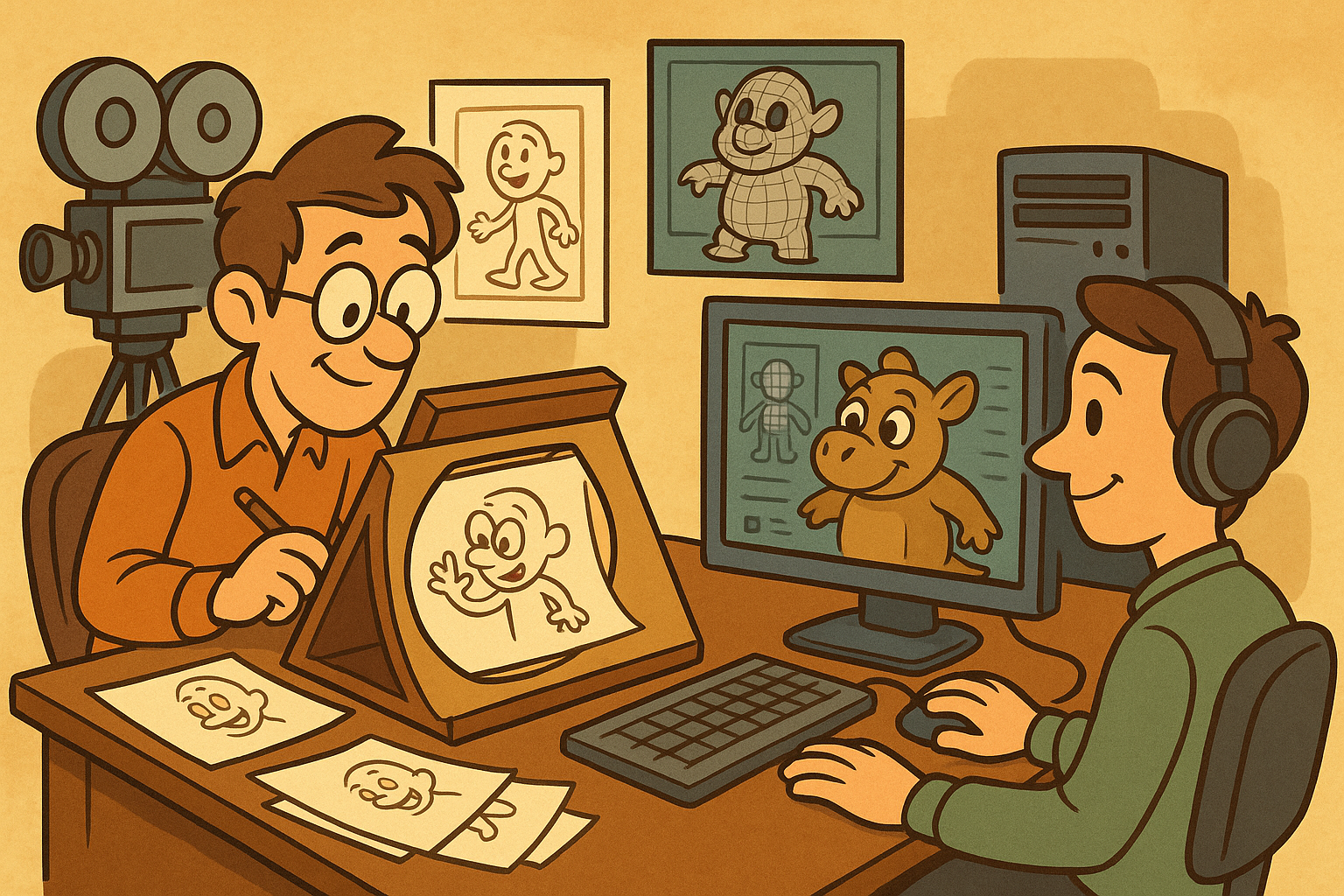
The transition from hand-drawn animation techniques to digital methods marked an era of radical transformation in the world of character modeling. In the mid‐to‐late 20th century, early innovators pushed the boundaries of what was possible with primitive digital tools, giving rise to concepts that would eventually redefine how animations were created. This period saw the incubation of digital animation design software through experimental techniques that attempted to replicate the steady flow of hand-drawn images using computational methods. Researchers and programmers strategized ways to convert traditional animation principles into digital sequences, and these initial endeavors were characterized by substantial trial and error. One of the central themes during this era was the oversimplification of complex human expressions into segments that the limited computers could process in a reasonable amount of time. As technology advanced even marginally, early developers began integrating mathematical algorithms with computer graphics techniques, enabling them to render basic movement and shapes that hinted at the fluidity observed in conventional animated films.
Emergence of Early Digital Tools
Early digital animation tools were often rudimentary and heavily reliant on computer programming languages that allowed for vector-based drawing. During these formative years, the focus was primarily on replicating classic animation sequences by capturing movement frame by frame. Developers experimented with simple line and curve generation algorithms, incorporating principles from industrial design and early computer-aided design concepts. These pioneering efforts laid the groundwork for future breakthroughs in digital character modeling by addressing the most critical developmental challenges: scalability, precision, and integration with existing artistic workflows. It was an era of exploration where every experiment contributed to the understanding that digital tools could, in fact, emulate traditional artistic techniques while offering new dimensions in flexibility and editing. The emerging technologies based on early pixel art and raster images eventually evolved into techniques that bridged the gap between 2D static drawings and dynamic 3D character animations, setting the stage for deeper research into digital sculpting and rendering.Key Innovations and Influential Figures
Several innovators played central roles in driving this transition, and their contributions remain a cornerstone in the history of design software. Among these, influential research teams emerging from academic laboratories began exploring how to automate the transformation of hand-drawn sketches into digital formats. Prominent figures in academia ventured into projects that questioned the viability of digital mediums to capture the aesthetic nuances of traditional arts. Their work involved detailed studies of light, shadow, and movement, laying down theoretical frameworks that would later influence mainstream digital animation software. Notable leaders in the field fostered an environment where art met science—an environment that prioritized experimentation in algorithm-driven design that ultimately contributed to character rigging, texturing, and animation pipelines. The legacy of these pioneers is evident in the methodologies and software tools that directly evolved from these early experiments, underlining the significance of their contributions. Through continued research and improvements in computer processing power, the foundational ideas birthed during this critical period became part of a larger narrative that pushed design software into a new paradigm.Early Beginnings in Digital Animation Character Modeling: Transition from Traditional to Digital Techniques
The shift from traditional methods of hand-drawn animation to digital techniques represented a revolution that redefined the aesthetics and practicalities of animation production. Initially, animators had to contend with the limitations imposed by physically drawing each frame, a labor-intensive process that restricted both creativity and production speed. The advent of early digital animation software provided new avenues for artists to experiment with motion more fluidly by leveraging computational methods to reproduce movement. While early iterations of these tools were limited by what computers could realistically process, they nonetheless introduced groundbreaking ideas such as interpolation and keyframe animation that replaced tedious manual drawing. Early adopters quickly learned to exploit the flexibility of digital tools by using algorithms to fill in frames between manually designed keyframes, thereby reducing the traditional reliance on in-between drawing.
Integration of Vector Graphics and Digital Interfaces
Detailed analyses reveal that vector graphics technology played a crucial role in this transition. With vector-based systems, artists were able to create and manipulate scalable images that maintained clarity regardless of resolution, a breakthrough that was particularly transformative for animation character modeling. Key milestones in the development of early digital tools included systems that allowed the direct manipulation of curves and lines, blending artistic intuition with mathematical precision. Innovations in the hardware utilized during these experiments, such as digitizing tablets and light pens, further accelerated the transition to digital media by mimicking natural drawing processes. This frontier also saw several bullet-pointed contributions that clearly marked its progress:- Reduction in manual labor: Algorithms automated the process of in-between frame generation.
- Scalability: Vector graphics allowed for the creation of images that could be scaled without loss of detail.
- Enhanced precision: Mathematical models improved the reliability and consistency of character movements.
Early Beginnings in Digital Animation Character Modeling: Innovative Concepts and Key Innovations
The innovative concepts introduced during the early days of digital animation were defined by a deep symbiosis between art and emerging computer technology. Early developers, inspired by both the fluidity of hand-drawn art and the mechanistic reliability of early computing, envisioned a new medium where creativity was not bound by the physical limitations of paper and ink. This vision was gradually realized as programmers introduced digital articulation techniques that simulated the natural motions and expressive capabilities found in traditional art forms. These early digital platforms emphasized not only the technical capacity to replicate movement but also the creative flexibility that allowed for the free addition of digital effects and filters, expanding the aesthetic vocabulary available to animators. As basic algorithms matured, they provided a fertile ground for further experimentation in areas like digital rigging and morph target animation, which revolutionized how characters could be developed and manipulated.
Technological Underpinnings and Early Digital Pioneers
Pioneers in this era often integrated academic research in computer graphics with practical development strategies to overcome the limitations of hardware at the time. Prominent innovators laid the theoretical framework on topics such as bezier curves, splines, and early rendering techniques, offering methods to generate and control smooth curves and transitions—essential elements in digital animation character modeling. This interdisciplinary approach brought together experts from mathematics, computer science, and art, catalyzing innovations that were instrumental in evolving design software. For instance, early software often incorporated:- Mathematical Models: Utilization of cubic and quadratic equations to simulate motion and shape transitions.
- Software Scriptability: The ability to write scripts to modify or automate repetitive tasks.
- Graphical User Interfaces (GUIs): Early iterations of GUIs enhanced user interaction, paving the way for more intuitive design software.
Technological Pioneers and Milestones: Contributions of Industry Pioneers
Industry pioneers ignited the technological revolution in digital design by introducing software that fundamentally redefined the artistic process. In the initial phases, several companies and independent developers took bold strides by integrating emerging computer technologies with conventional artistic techniques. Their innovative products and research not only accelerated the digital transition but also established standards that would shape the evolution of design software for years to come. Pioneering companies such as those founded in Silicon Valley and academic spin-offs were among the first to market digital tools that allowed for manipulation of 2D vector sketches, ultimately bridging the gap to more complex 3D character models. These visionary efforts underscored the significance of merging artistic creativity with robust computational methods. Early milestones included proprietary software systems that were capable of simple interpolation between frames and the creation of rudimentary yet innovative 3D wireframe models—a critical turning point that demonstrated the potential of computer-aided design in animation.
Key Milestones and Notable Contributions
Pioneers during this period achieved several critical advancements:- Development of vector-based drawing systems: Early software harnessed vector graphics to maintain clarity and precision.
- Introduction of keyframing techniques: Automated interpolation allowed for smoother transitions between animation frames.
- Exploration of three-dimensional modeling: The groundwork for transitioning from 2D sketches to 3D models was laid with the advent of basic 3D wireframe programs.
Technological Pioneers and Milestones: Early Software Milestones from 2D to Rudimentary 3D
The evolution from 2D vector sketches to rudimentary 3D character models represents one of the most significant milestones in the history of digital animation. Early software tools began their life with simple 2D representations—refined vector sketches that were primarily used for storytelling and basic motion depiction. As the underlying computational resources grew more powerful, these tools gradually integrated capabilities that allowed for early forms of 3D modeling. This shift was largely driven by the demand for more lifelike animation and nuanced character movement. In the initial transition, software systems employed mathematical algorithms to extrude 2D profiles into three-dimensional forms, thereby giving animators new ways to visualize and manipulate depth, volume, and spatial relationships. The early attempts at 3D modeling were aimed at capturing the essence of traditional clay or wax models, where subtle variations in curvature and illumination played a vital role in conveying realism. Animators and software developers found that bridging the 2D/3D gap significantly enhanced the narrative potential of animated films by providing a more immersive experience.
Technological Breakthroughs and Methodologies
The journey from 2D to nascent 3D character models involved several technical innovations:- Extrusion Techniques: Early software used extrusion algorithms to convert flat sketches into volumetric shapes.
- Basic Solid Modeling: The integration of solid modeling principles allowed for the creation of 3D figures with measurable depth and volume.
- Prototype Renderers: Even rudimentary renderers provided a glimpse of realistic lighting and shadow play, crucial for establishing three-dimensional authenticity.
Technological Pioneers and Milestones: Impact of Academic Research and Governmental Projects
Academic research and governmental research initiatives carried significant weight in shaping the technology behind digital animation character modeling. Universities and research institutions formed strategic partnerships with emerging tech companies, contributing critical insights into how advanced mathematics and computer science theories could be applied to real-world animation challenges. Professor-led projects explored topics such as computational geometry, algorithmic animation, and human-computer interaction design. These research endeavors were not only academically enriching but also produced tangible technology contributions that influenced the direction of commercial software development. Collaborative efforts provided early models, prototypes, and even code libraries that allowed for rapid prototyping and testing of new ideas. The infusion of academic perspectives helped balance theory with practicality, establishing decidable methodologies for addressing naturalistic character movement and morphing techniques that would otherwise remain in the realm of speculative science.
Outlined Contributions from Research and Public Initiatives
Academic and governmental projects introduced several groundbreaking contributions:- Algorithmic Frameworks: Researchers developed robust computational models that underpin modern techniques in animation physics.
- Prototype Software Tools: Early prototypes served as testbeds for integrating academic theories with usable software solutions, often made available as open source or shared libraries.
- Interdisciplinary Collaboration: Cross-functional teams of mathematicians, computing experts, and graphic designers forged new paths in digital character modeling.
Evolution and Integration of Advanced Modeling Techniques: Transformation Through Solid and Geometric Modeling
The evolution of design software in animation character modeling reached new dimensions as solid and geometric modeling techniques were seamlessly integrated into development workflows. Over time, the simplistic algorithms of early digital tools gave way to more sophisticated mathematical models that brought a high degree of precision and nuance to digital sculpting. Solid modeling introduced methods for representing characters as volumetric entities defined by boundaries, while geometric modeling enabled artists to operate within multi-dimensional spaces to capture intricate surface details. These innovations catalyzed a paradigm shift where character representation was no longer a flat depiction but a fully homologous replication of three-dimensional form. The infusion of these techniques allowed animators to simulate complex physical interactions, light behaviors, and material properties that closely resembled their real-world counterparts. Methodologies for tessellation, surface approximation, and subdivision allowed for continuous improvements in the quality of animated characters, ensuring that digital models matured in both structure and aesthetics.
Key Technological Advances in Modeling Techniques
The integration of advanced modeling techniques involved several breakthrough developments:- Solid Modeling Algorithms: Introduction of boundary representation (B-rep) techniques that accurately define surfaces and volumes.
- Geometric Subdivision: Methods to refine character surfaces into smoother, more lifelike models.
- Mathematical Modeling: Employment of complex mathematical equations to simulate natural forms and lighting conditions.
Evolution and Integration of Advanced Modeling Techniques: From Basic Digital Sculpting to Motion Capture and Realistic Rendering
One of the most transformative phases in the evolution of digital animation character modeling was the move from a basic digital sculpting approach to the incorporation of advanced motion capture techniques and highly realistic rendering engines. As computational power grew, early generative models were refined to accommodate complex animations, seamless textures, and lifelike renditions of human facial expressions and body movements. This evolution was underpinned by various technological breakthroughs that integrated hardware advancements, such as motion capture suits and high-definition cameras, with sophisticated algorithms capable of processing and mapping vast amounts of data onto digital skeletons. By capturing real-life movements and nuances, developers could imbue animated characters with a sense of realism previously thought unattainable. Furthermore, improved rendering algorithms that simulated the interplay of light and textures contributed immensely to producing visually compelling animations that blurred the line between reality and digital art.
Components Driving the Transition
The comprehensive transformation from basic digital sculpting to enhanced animation involved the following notable elements:- Motion Capture Integration: High-fidelity motion capture technology allowed the precise mapping of human movement onto digital characters.
- Realistic Rendering Techniques: Techniques such as ray tracing and global illumination produced images with lifelike lighting effects.
- Advanced Digital Sculpting Tools: The evolution of sculpting software enabled unprecedented detail in character features.
Evolution and Integration of Advanced Modeling Techniques: Collaborative Workflows and Cross-Platform Development
Throughout the evolution of digital animation character modeling, one of the most significant innovations has been the development of collaborative workflows and the cross-platform approach to software design. As the complexity of digital projects increased, individual software solutions were no longer sufficient to meet the diverse needs of animators and designers. In response, a host of new integrated platforms emerged that allowed teams of specialists—from modelers and animators to texture artists and technical directors—to work in tandem in real-time. The convergence of disparate disciplines on a common digital platform meant that feedback loops shortened, iteration cycles accelerated, and creative outputs improved in quality and consistency. Enhanced communication protocols within these platforms ensured that updates made in one module were automatically reflected in other components of the software ecosystem. This trend towards a synergistic work environment not only streamlined production pipelines but also contributed to the evolution of design software into more robust and versatile platforms.
Advantages of Collaborative and Cross-Platform Innovations
The collaborative workflow and cross-platform development strategies introduced several definitive advantages:- Real-Time Collaboration: Multi-user environments allowed simultaneous editing and review, drastically reducing production times.
- Integrated Toolsets: Suites of applications that worked harmoniously to manage everything from modeling to rendering enhanced overall productivity.
- Cross-Platform Flexibility: Software solutions started supporting various operating systems, ensuring broader accessibility and adaptability.
Conclusion: Summary and Future Trends in Digital Animation Character Modeling
The historical journey of digital animation character modeling is a testament to the relentless pursuit of merging artistic expression with technological innovation. From the early beginnings of basic digital animation techniques grounded in traditional hand-drawn concepts, the industry has witnessed a series of [transformative breakthroughs] that reshaped the aesthetics and techniques of character design. Pioneers in academia, industry, and government projects contributed to a legacy built on vector-based drawing systems, rudimentary 3D modeling, and eventually advanced solid and geometric modeling technologies. Each milestone—whether it was the development of keyframing systems, the integration of motion capture technology, or the advent of collaborative cross-platform workflows—played a crucial role in sculpting the intricate processes that underlie modern design software today.
Reflecting on the Evolution and Looking Forward
The progression from digitally replicating hand-drawn sketches to implementing advanced motion capture and realistic rendering has not only revolutionized the medium of animation but also provided a framework for future innovations. As technology continues to advance rapidly, the next generation of design software is poised to further blur the line between the physical and digital realms. Future trends indicate a growing emphasis on artificial intelligence-driven design automation, real-time rendering, and augmented as well as virtual reality integrations that promise to take creative expression to unprecedented heights. The collaborative and interdisciplinary approach that characterized the early days now continues to evolve into ever more sophisticated platforms that support comprehensive, multi-user creative processes. As these trends converge, the industry is likely to witness further integration of cutting-edge technology with timeless artistic principles, ensuring that the evolution of digital animation character modeling remains an exciting and ever-dynamic field.Key Takeaways
In summarizing the fascinating journey of digital character modeling:- Foundational research and early innovation set the stage for a revolution in digital art.
- Breakthroughs in software methodologies transformed 2D sketches into multidimensional character representations.
- Collaborative and cross-platform approaches enabled seamless integration of complex workflows.
Also in Design News