Your Cart is Empty


Rhino 3D Tip: Use Osnaps Selectively for Precise Rhino Modeling
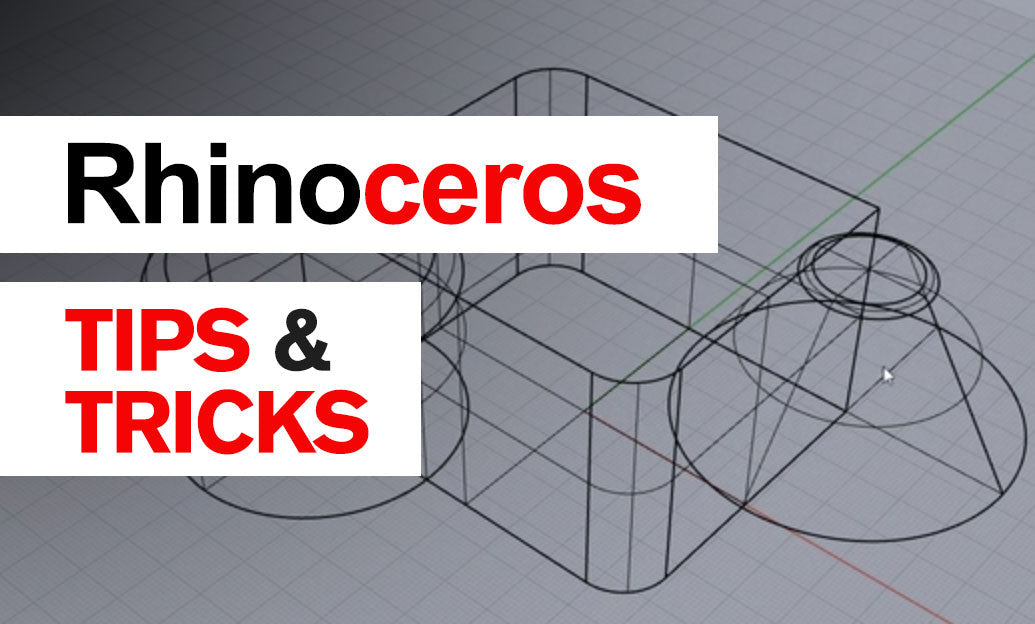

Object Snaps, or Osnaps, are one of the most important tools for accurate modeling in Rhino. When used well, they help you place geometry exactly where you intend, avoid tiny alignment errors, and build cleaner models from the start. If your curves do not join, surfaces fail to trim correctly, or solids refuse to close, the issue often begins with imprecise snapping.
A practical tip is to treat Osnaps as a precision tool, not something to leave fully enabled all the time. Many users turn on too many snap options at once, then wonder why the cursor keeps jumping to the wrong location.
- Keep your everyday Osnaps limited to the ones you use most often, such as End, Mid, Cen, Near, and Point.
- Enable specialized snaps only when needed, like Int, Perp, Tan, Quad, or Knot.
- Use one-time Osnaps from the command line or context options when you need a specific snap for a single pick.
This small habit reduces wrong selections and gives you much more control during curve creation, editing, and surface construction.
Here is a simple way to think about the most common Osnaps:
- End snaps to the end of a curve or edge.
- Mid finds the midpoint of a curve segment.
- Cen snaps to the center of circles and arcs.
- Near lets you pick a location near the object without forcing another snap point.
- Int snaps to intersections.
- Perp helps create perpendicular relationships.
- Tan is useful for tangent curve and arc construction.
- Quad snaps to quadrant points on circles and ellipses.
One of the most overlooked details is that Osnaps work together with view control. A snap that looks correct in Perspective may not be what you intended in 3D space. To avoid mistakes:
- Confirm critical picks in multiple viewports.
- Use planar views like Top, Front, and Right when building precise profiles.
- Combine Osnaps with Ortho, SmartTrack, and Project when you need controlled placement.
The Project Osnap setting is especially important. When enabled, Rhino projects your snap to the active construction plane. This is extremely helpful for 2D drafting in a 3D environment, but it can also cause confusion if you are expecting a true 3D snap. If your points seem correct visually but end up on the wrong elevation, check whether Project is on.
Another professional habit is to zoom in before committing to important snaps. Rhino is highly accurate, but your selection still depends on visual confirmation. On dense models, edges, control points, and reference curves can compete for the cursor. A quick zoom often prevents downstream cleanup.
If you want to sharpen your Rhino workflow, precise snapping is a great place to start. Clean input geometry leads to cleaner booleans, better joins, and more reliable manufacturing output. For more Rhino tools, workflow ideas, and professional software resources, visit NOVEDGE’s Rhino collection. You can also explore more design software and industry insights directly at NOVEDGE.
In short: fewer Osnaps, used intentionally, will usually give you better results than enabling everything at once. Precision in Rhino starts with where you click.
You can find all the Rhino products on the NOVEDGE web site at this page.
Also in Design News