Your Cart is Empty


Integrating ERP Systems with Advanced Design Software: Transforming Modern Production Workflows


Section 1: Introduction and Context
The evolution of both ERP systems and design software has transformed the way modern industries operate, leading to unprecedented levels of efficiency and precision across multiple sectors. In today’s competitive business landscape, companies rely heavily on these technological advancements to improve production processes, promote agile responses to market changes, and foster a culture of innovation. This integration enables manufacturers to coordinate every aspect of production—from conceptual design through to final product manufacturing—while minimizing errors and ensuring that all stakeholders are well-informed throughout each phase. The rapid advances in **design software** have allowed engineers and architects to experiment with complex models, perform high-level simulations, and create dynamic visualizations that accurately reflect product intent. Similarly, ERP systems have matured to incorporate integrated financial, inventory, sales, and human resource functions. As manufacturing and design workflows evolve to meet the increasing demands of customization and speed-to-market, the imperative to merge these two powerful realms becomes even more urgent. The evolution of manufacturing processes now depends on cross-functional teams working seamlessly to reduce redundant tasks and ensure data accuracy.
Historical Development of ERP Solutions
Historically, ERP systems were developed as standalone platforms that handled administrative and operational tasks, while design software was typically used independently within dedicated engineering departments. Over time, the convergence of these systems became essential as companies recognized the value of integrated data flows in the reduction of lead times and operational silos. Bulleted lists of factors that propelled this evolution include:
- Increased complexity of production: As products became more sophisticated, the need for real-time and accurate data across all departments grew.
- Efficiency demands: Modern supply chain and logistics operations require streamlined communication channels between design and production.
- Technological innovation: The advent of cloud computing, real-time analytics, and IoT devices provided the technical infrastructure necessary for system integration.
The Need for Integrated Solutions in Modern Production
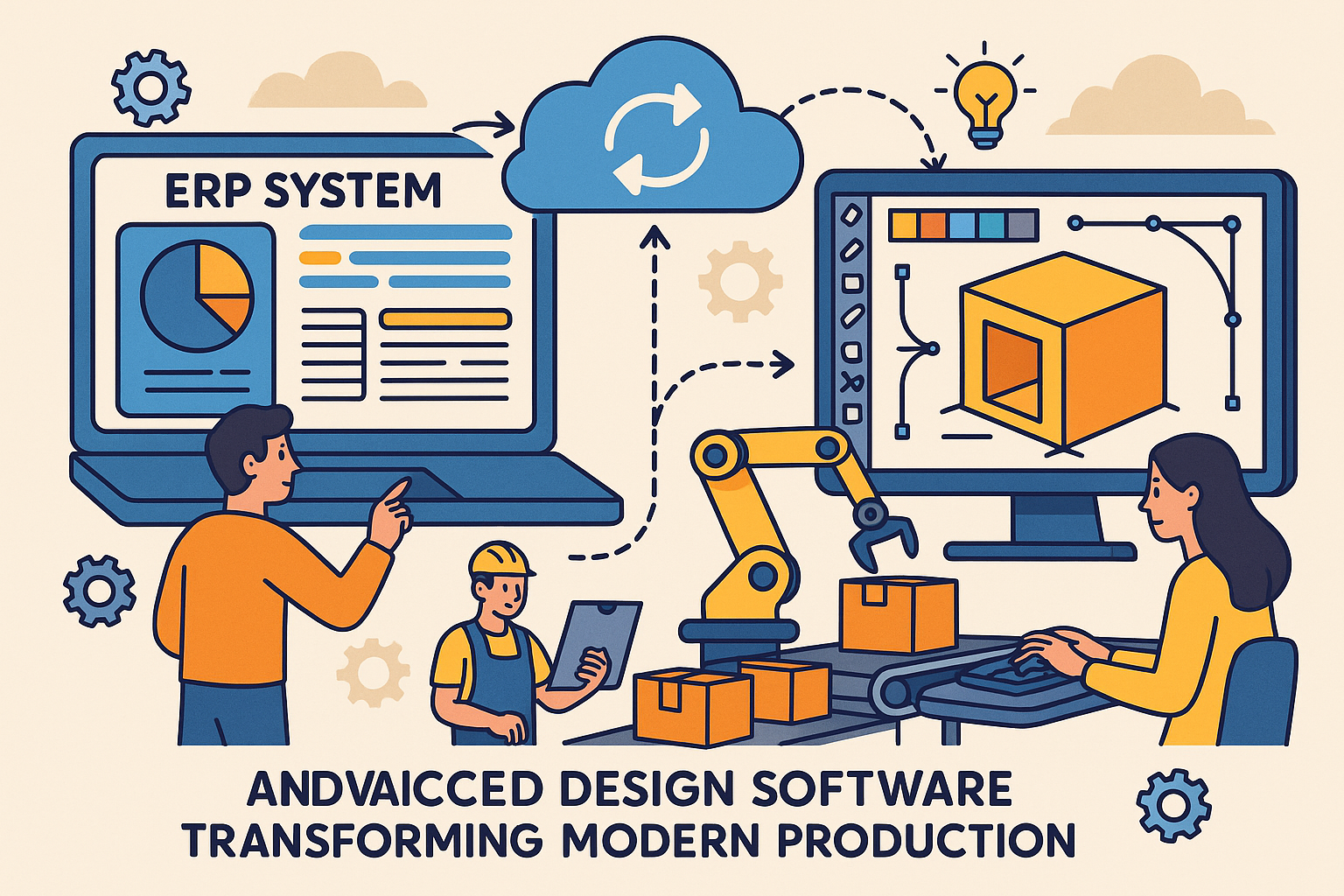
As manufacturing has transitioned into the digital age, the synchronization of ERP systems with design software has become a competitive imperative. In this context, robust integration not only allows for more agile responses to design changes but also supports enhanced communication between engineering teams and production personnel. By ensuring that every update—whether conceptual or operational—is accurately reflected across the board, businesses can significantly reduce errors and improve efficiency. The primary objectives of integrating these systems are to facilitate real-time data synchronization, streamline workflows, and enable a single source of truth for product and production information. Moreover, the employment of **integrated solutions** is particularly beneficial for industries where rapid prototyping and adaptable manufacturing processes are crucial to meeting market demand. A successful integration ensures that design innovations translate directly into enhanced manufacturing practices, thus driving productivity and fostering a streamlined, holistic production environment where technical precision and operational efficiency coalesce.
Section 2: Integration Strategies and Methodologies
A successful integration of design platforms and ERP systems relies on choosing and implementing the right strategies and methodologies that align with a company’s production goals and technical environment. There are several approaches to addressing the integration challenges that arise from linking traditionally disparate systems. One common method is the utilization of direct API connections to enable seamless communication between design software and ERP platforms. This approach allows for real-time data flow between systems and ensures that updates in one system are instantly reflected in the other. In instances where direct connectivity is impractical due to system complexity or legacy software constraints, middleware and integration platforms serve as a critical bridge by translating data formats and protocols between design and production environments. These middleware solutions help maintain data integrity and facilitate smooth communication without requiring extensive re-engineering of existing systems.
Direct API Connections and Middleware Approaches
The deployment of direct API connections is often viewed as the most streamlined and efficient integration strategy because it builds a direct link between design software and ERP systems. However, the real-world challenges of varying data formats, security protocols, and system limitations sometimes necessitate implementing middleware solutions that can act as translators between systems. These integration points are critical in ensuring that the complete lifecycle of product development—from ideation to manufacturing—remains continuously synchronized. Some bullet points that describe the key elements of these strategies include:
- Direct API connectivity: Enables instant data transfer and minimizes the latency in updates across platforms.
- Middleware platforms: Provide a robust solution to bridge disparities in data structure and communication protocols.
- Scalability considerations: Both approaches need to factor in future expansion, ensuring long-term system compatibility and stability.
Data Synchronization and Best Practices
Different methodologies employed for data synchronization play a pivotal role in determining the overall success of the integration initiative. Integration systems typically adopt either real-time updates or batch processing mechanisms. Real-time synchronization is preferred for environments that require immediate attention to data changes—such as design modifications or inventory adjustments—while batch processing may be more suitable for large datasets or non-critical updates that occur on a periodic basis. Establishing **real-time updates** not only enhances system responsiveness but also promotes consistency and accuracy across departments. It is essential to ensure that any integration framework also prioritizes data integrity by meticulously validating the data transfer process and implementing strong error-checking mechanisms. Key best practices include:
- Stakeholder collaboration: Early involvement of all relevant teams ensures that system requirements, potential challenges, and desired outcomes are clearly defined.
- System compatibility: Evaluating existing infrastructure and ensuring that the integrated solution can adapt to various enterprise software versions.
- Planning for scalability: Integration strategies must be designed with future updates and expansion in mind, ensuring that they can accommodate growing data volumes and evolving production needs.
Section 3: Benefits, Use Cases, and Potential Challenges
Merging ERP systems with advanced design software brings a comprehensive suite of benefits that transform and streamline production workflows, making processes more efficient while reducing the risk of costly errors. One of the primary advantages of integrated solutions is the significant reduction of redundant data entry that often plagues traditional production environments. By bridging the gap between design and manufacturing, professionals are able to rely on a single repository of updated information, which in turn facilitates smoother hand-offs between teams and ensures that all project stakeholders are on the same page. As part of the integration strategy, the enhanced communication channels allow for real-time updates that help in aligning design changes with manufacturing requirements. This seamless interaction is critical in industries where even minor delays or inaccuracies can result in significant production setbacks. Additionally, the ability to streamline workflows means that core business processes are optimized for efficiency and clarity, boosting overall operational performance and reducing the risks associated with manual data handling.
Enhanced Production Workflows and Communication Benefits
Enhanced production workflows are at the forefront of the integration benefits. Integrating ERP with design software eliminates the need for re-entering data at multiple stages of production, thereby ensuring that every team—from design to manufacturing—has access to the latest, verified information. This, in turn, drives an increase in overall operational effectiveness. Some of the core aspects of these streamlined workflows include:
- Minimized redundant data entry: Efficient data reuse reduces errors and frees up valuable employee time for more strategic tasks.
- Improved communication: Real-time updates ensure that any design modifications are immediately known to manufacturing teams, thus avoiding potential delays.
- Automated workflows: Leveraging automation in the integration process minimizes manual intervention and streamlines routine processes.
Addressing Potential Challenges and Mitigation Strategies
Despite the numerous benefits of integrating ERP systems with design platforms, organizations must remain aware of potential challenges that could hinder the success of such projects. One of the most critical issues is ensuring data security and robust access control. As multiple departments interact with shared data repositories, safeguarding sensitive information becomes paramount. Additionally, the complexity of managing systems that were not originally designed to work together can lead to unforeseen technical challenges such as synchronization delays or data mismatches. A thorough risk assessment is required to mitigate these challenges. Key mitigation strategies include:
- Implementing strong data security protocols: Encryption, multi-factor authentication, and regular security audits can significantly reduce the risk of data breaches.
- Establishing comprehensive training programs: To ensure user adoption, all teams should receive proper training and continuous support on the integrated system’s functionalities.
- Utilizing robust middleware solutions: These platforms can help manage complexity by providing an additional layer of data validation and error-checking between systems.
Section 4: Conclusion
In conclusion, the convergence of ERP systems with advanced design software is not merely a technological upgrade—it represents a fundamental shift in operational philosophies that prioritizes efficiency, data integrity, and interdepartmental collaboration. As the manufacturing landscape continues to evolve and demand faster response times with impeccable accuracy, the integration of these systems offers a viable solution to the challenges of modern production environments. The strategies explored have underscored the importance of utilizing direct API connections, middleware platforms, and robust data synchronization techniques, while also highlighting best practices that promote stakeholder collaboration and future scalability. These integrated solutions not only optimize production workflows by minimizing redundant data entry and enhancing communication between design and manufacturing teams but also pave the way for improved scheduling, resource allocation, and overall operational performance.
Final Recap of Integration Strategies and Benefits
The benefits of integrated ERP and design software solutions extend beyond mere operational gains. They offer an opportunity for companies to streamline complex processes, reduce potential errors, and build a resilient infrastructure that can adapt to future technological developments. Important highlights include:
- Enhanced production efficiency: Real-time data synchronization eliminates delays and minimizes manual data re-entry, leading to faster production cycles.
- Robust R&D support: Designers and engineers can directly observe production data, leading to more informed decision-making and design iterations.
- Competitive advantage: Businesses that embrace these advanced integrated systems secure a strong market position by offering quicker turnaround times and improved quality management.
Future Outlook and Embracing Integrated Solutions
Looking forward, the continuous advancements in technology herald a promising future for integrated production systems. Emerging trends such as advanced data analytics, AI-driven decision-making, and enhanced cyber-physical systems are set to further refine the integration of ERP and design workflows. Companies that stay ahead of these developments and invest in robust integrated solutions will be well-positioned to face the challenges of tomorrow’s fast-paced, competitive market. By embracing a culture of innovation and continuous improvement, organizations can ensure that their production environments remain adaptive, secure, and efficient—ultimately leading to substantial gains in overall business performance and sustained competitive edge. The successful integration of ERP systems with design software not only redefines how products are developed and manufactured but also solidifies a pathway for continued industry transformation in the digital era.
Also in Design News