Your Cart is Empty


Design Software History: Foundations and Evolution of Early CAD Software: From Command Lines to User-Centric Design Innovations


Foundations of Early CAD Software
Introduction to Early Functionalities and Capabilities
In the annals of design software history, the inception of early CAD software marked a radical shift in both the methodology of design and the very nature of technological interaction. Initially developed to tackle the complex requirements of architectural drafting and mechanical design, these programs laid the groundwork for computer-assisted creativity. They were built with highly specific functionalities—such as basic line-drawing, primitive 3D representations, and rudimentary geometric constructions—that enabled engineers and designers to conceptualize their creations on a digital platform. During these formative years, the software was characterized by command-line interfaces and terse menus, which were reflective of the computational limitations and the hardware constraints of the era. This period witnessed the emergence of systems that embodied not only an algorithmic approach to design but also a clear and distinct link between human creativity and digital representation. The foundation of these functionalities established a base that would, in time, give way to more expansive design capabilities.Emphasis on Computational Innovation and Practical Applications
The early CAD systems were purpose-built to increase precision, reduce manual errors, and expedite the design process. Computational innovation in these algorithms was driven by the necessity to bridge the gap between manual drafting and automated design output. Engineers recognized that even the most rudimentary capabilities of these systems could drastically cut down production time, and in doing so, they redefined the expectations of what design software could achieve. The inclusion of capabilities for direct numerical input and real-time adjustments enabled users to work with a level of customization that an analog process could not provide. Moreover, the marriage of algorithmic precision with digital graphics paved the way for future generations of design software that would not only enhance productivity but also promote an entirely new mindset of digital design. The introduction of these basic functionalities, therefore, represents one of the key milestones in the evolution of design technology.UI/UX in Early CAD: Definition and Importance
Foundations of User Interface and User Experience Design
The concept of UI/UX design in the realm of early CAD was not initially recognized as a separate discipline, yet its foundations were deeply embedded within the design of the software itself. Early software developers had to make critical decisions about how users would interact with the system, often balancing the demands of functionality with the emerging need for simplicity. The user interface was typically text-based, relying heavily on command inputs and symbolic notations, which demanded a high level of expertise from the user. Nonetheless, even in these primitive forms, there was an emphasis on ensuring that the system’s functionality was accessible and efficient. Designers experimented with different layouts, menu structures, and input methods, striving to make the early CAD tools as intuitive as possible under the constraints of existing technology. This period set the stage for defining what would eventually become modern UI/UX best practices.Enhancing Usability Despite Technological Constraints
Despite the challenges posed by limited hardware and processing power, the pioneers of early CAD software were committed to creating interfaces that met user demands. They placed an early emphasis on usability by simplifying workflows and streamlining interactions wherever possible. This was achieved by developing visual cues and feedback mechanisms that, although rudimentary by today’s standards, provided some degree of interactivity that modern users might recognize. Efforts were made to pair input devices such as keyboards and early pointing devices with onscreen representations that helped bridge the gap between user intent and software output. The layering of clear instructions, customizable settings, and explicit error messages reflected an awareness that even the simplest interface could significantly affect the overall design process. As user expectations began to evolve, these early experiments in UI/UX design established critical paradigms such as the importance of clear visual hierarchies and intuitive interaction patterns.Technological Limitations and User Expectations in Early Design Software
Contextualizing the Hardware Landscape and Its Impact
The historical context for early CAD software was defined by severe technological limitations that shaped both the development and the user experience of these systems. Operating on processors with limited speed and memory, early design programs had to be meticulously optimized to ensure that they could perform complex computations without overwhelming the available resources. These limitations necessitated a focus on efficiency and cautious resource allocation, resulting in interfaces that were decidedly utilitarian. Users were, by necessity, trained to work within these constraints, and the expectations they brought to the table were informed by a clear understanding of the underlying hardware deficiencies. Such conditions compelled designers to prioritize the clarity of graphical output over aesthetic considerations, ensuring that every pixel and every line was used effectively to communicate crucial design information.Balancing Performance with Usability Amid High Expectations
Despite these constraints, users demanded systems that could deliver precision, reliability, and speed. Users, ranging from engineers and architects to industrial designers, expected these early CAD programs to enhance productivity, not hinder it. To reconcile the limitations of early computing hardware with user expectations, developers implemented optimization strategies that often involved sacrificing some aspects of graphical fidelity in favor of performance gains. A set of design principles emerged, which were built on the idea that efficiency was not only a technical requirement but also a core aspect of user satisfaction. Developers commonly employed a series of best practices that included explicit command inputs, context-sensitive help, and feedback loops, all of which contributed to a more user-friendly experience. In doing so, they established a clear link between technical constraints and the evolution of user experience, a connection that continues to resonate in modern design paradigms.Pioneers in CAD Software Development
Visionaries and Their Monumental Contributions
Among the figures who defined the trajectory of early design software, a handful of pioneers made contributions that resonated far beyond their immediate eras. One of the most notable figures in this context is Ivan Sutherland, whose groundbreaking work with SketchPad in the early 1960s revolutionized the concept of human-computer interaction. SketchPad not only introduced the idea of interactive graphics but also laid out an early framework for user interface design. Sutherland’s innovations demonstrated that computers could be more than just number-crunching devices; they could be tools for creative expression and technical precision. His work established principles that would eventually inform the development of user-friendly design systems capable of accommodating both creative and technical workflows. In recognizing and harnessing the power of early graphical representations, these pioneers transformed the design process into a more dynamic and interactive experience.Influence and Lasting Impact on Future Software Evolution
The legacy of early software innovators is evident in the enduring impact their work has had on subsequent generations of CAD systems and UI/UX design. By providing a framework for the direct manipulation of design elements, these pioneers set forth a vision wherein user input was not only a command line collection but a dialogue between human intent and digital execution. Their work paved the way for later innovations that would emphasize visual feedback and interactive modeling. Furthermore, the approaches they adopted—an iterative process of refinement based on direct user input—became a cornerstone for modern software development. Today’s design environments continue to draw inspiration from those early breakthroughs, underscoring the value of simplicity, clarity, and user-friendly interaction strategies. Such a transformative legacy highlights just how pivotal the early experiments in CAD were in shaping the future of digital design.Rise of Graphical User Interfaces in Early CAD
Emergence and Early Adoption of Graphical Interfaces
The transition from purely text-based interactions to more visual and intuitive systems marked an important chapter in the evolution of design software. Early adopters of graphical user interface (GUI) elements recognized that a visual approach could transcend the limitations of command-based input methods. Early CAD systems began incorporating rudimentary visual displays that allowed users to interact with design elements in a more straightforward manner, replacing long, text-based menu commands with iconic representations of tools and functions. These interfaces provided designers with a more natural and immersive mechanism for engaging with digital models, encouraging an approach that emphasized visual exploration over abstract command inputs. Despite the inherent challenge of implementing GUIs on machines with limited graphics capabilities, the integration of these interfaces signified a major leap toward more user-friendly operations. Pioneers in this space were able to demonstrate that even low-resolution screens could convey critical design information effectively.Adapting to Limited Computing Power with Innovative Strategies
In order to overcome the constraints posed by early hardware, developers devised innovative strategies for rendering and managing visual data. They integrated fundamental elements such as icons, buttons, and windowed dialogs, which allowed for a modular approach to user interaction. These advances not only improved the usability of CAD systems but also led to a shift in how users conceptualized the design process. The early GUI designs were characterized by a delicate balance between the need for clarity and the harsh realities of limited processing speeds and graphical memory. Developers often relied on techniques such as screen buffering and incremental display updates, ensuring that users received timely visual feedback without overwhelming the system's resources. This period saw rapid experimentation, with the continuous refinement of interaction models based on direct user feedback. The introduction of simplified visual cues and structured task flows provided a vital stepping stone that connected the highly technical functionalities of early CAD systems with the human desire for intuitive, natural interaction.Challenges and Iterative Feedback in Early Design Software
Understanding the Constraints and Navigating Limitations
Early developers of design software consistently grappled with the dual challenges of limited computing power and the need for precise user control. The iterative process of software development during this era was driven by continuous user feedback that highlighted both successes and the shortcomings of the interfaces. Even slight delays in rendering or imprecise control over design elements could disrupt workflows and lead to user frustration. As a result, developers were prompted to develop scalable strategies to handle complex operations under significant hardware constraints. Primary concerns included managing screen redraws, optimizing memory usage, and maintaining responsiveness during intricate design tasks. The systems were often engineered to allow manual overrides and adjustments, letting expert users tailor the software response to their own workflow. This careful balancing act between advanced computational tasks and user-centric performance eventually laid the foundation for an iterative design process that became central to modern design software development.Refining the Iterative Process Through Direct User Involvement
As feedback from the user community began to accumulate, developers recognized the necessity of close collaboration with actual end users. Over time, this resulted in an iterative refinement process wherein usability testing and direct feedback loops became a critical feature of the development cycle. New iterations of software were not just released based on theoretical performance improvements but were actively shaped by input from professionals who used these systems in real-world settings. Developers instituted structured feedback mechanisms that detailed specific problems and offered hypotheses for improvement. This involved:- Frequent beta releases to select user groups
- Workshops and user sessions to observe design behavior
- Structured surveys to gather quantitative and qualitative data
Key Innovations Paving the Way for Modern Design Usability
Early Breakthroughs That Shaped Usability
Several key innovations emerged during the early days of CAD that not only addressed immediate usability challenges but also ushered in principles that underpin modern design philosophies. Developers introduced features that allowed for adjustable layouts, context-awareness, and customizable toolbars. These features were implemented in response to the demanding needs of engineers and designers who required a flexible environment to accommodate varying project requirements. Such innovations were particularly significant because they broke with the rigidity typically seen in software from that time, offering instead a dynamic system that could evolve with user needs. These early breakthroughs include the introduction of real-time zooming, panning, and rotation of digital models—functionalities that not only delighted users but also provided a palpable sense of control over the design process. By striving for intuitive interactions, these innovations set the stage for subsequent refinements in design software usability.Foundational Principles Influencing Contemporary Systems
Many of the usability features conceived in those early years still resonate in today’s design environments. For example, the concept of modular toolsets and context-sensitive controls continues to influence the way modern software is structured. Developers learned that an adaptable interface—one that could accommodate personal preferences and varying workstyles—was essential for delivering a satisfying user experience. As a result, many contemporary design systems continue to offer extensive customization options, allowing users to modify both the visual layout and functionality of the software to match their particular needs. Additionally, the practice of iterative improvements driven by direct user feedback has cemented its place within the foundations of software development. Key principles such as these reinforce the idea that while the underlying technology has significantly evolved, the core desire for intuitive, efficient, and user-centered design remains unchanged.Transition from Early Principles to Modern Interface Design
Evolution of Interface Design from Command Lines to Visual Interactions
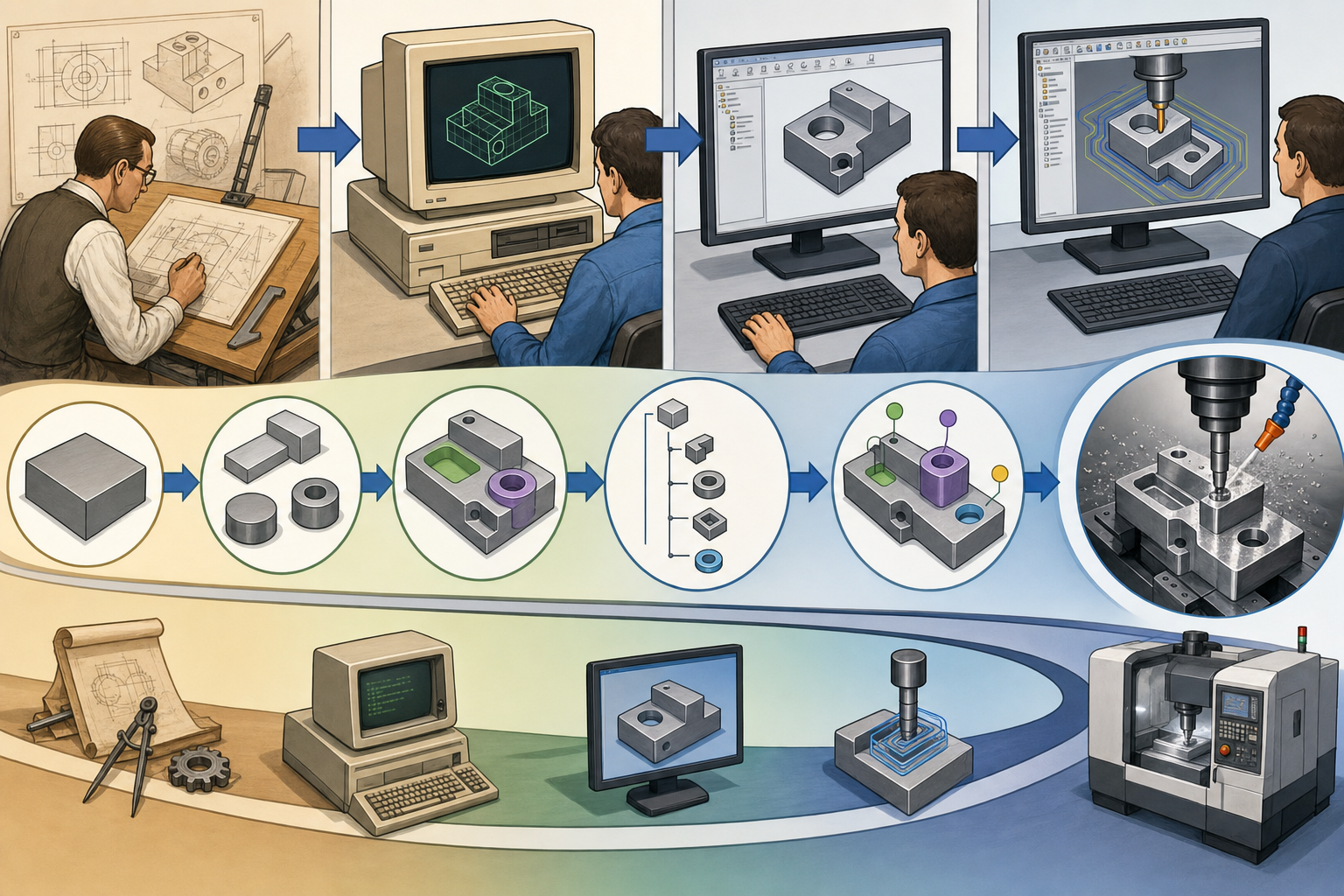
The monumental shift from the early, command-based design interfaces to today's sophisticated graphical environments is a testament to decades of innovation and refinement in UI/UX design. In early CAD systems, users were expected to memorize command inputs and navigate text-laden menus. Today, interactive elements and visual representations dominate the landscape, making complex design tasks significantly more accessible to a broader user base. This evolution was driven by advancements in both hardware technology and the accumulation of user feedback over time. The transition was gradual, with designers leveraging emerging computational power to incorporate real-time rendering, dynamic tool palettes, and interactive model manipulation. As software platforms matured, the ability to run robust graphical interfaces without sacrificing performance became a critical benchmark for success. Over the decades, the field has witnessed a slow but steady transformation of these early principles into sophisticated, context-aware interfaces that cater to the innate human desire for visual clarity and trust in the operational system.Integrating Legacy Principles with New Technologies
In bridging the past with the present, modern designers have integrated many of the core principles from early CAD systems into contemporary software. This integration involves blending legacy concepts such as modular toolbars and context menus with state-of-the-art user centered interactions like drag-and-drop and touch responsiveness. Today’s platforms routinely offer adaptive interfaces that respond to user habits and even predict user needs based on historical data and real-time context. Designers are now equipped with improved methodologies that not only enhance visual clarity but also optimize the arrangement of interactive elements for efficiency. This evolutionary trajectory has been driven largely by an understanding that while hardware may evolve, the human factors determining usability remain relatively constant. The simple but vital innovations of the past continue to underpin modern interfaces, proving that adaptability and iterative testing remain at the heart of high-quality design software. As a result, modern UI/UX best practices heavily emphasize the combination of aesthetic appeal, technical performance, and intuitive interaction—principles that were first explored in the pioneering eras of CAD.The Emergence of Human-Centered Design and Ergonomics
From Technical Precision to User-Centric Philosophies
The evolution of design software has increasingly embraced a human-centered approach, where the ergonomics of interaction play a pivotal role in shaping the user’s experience. Early design systems were primarily focused on technical precision and efficiency; however, as systems matured, attention shifted toward understanding how users interact with these tools. This transition heralded the emergence of a methodology that prioritized the comfort, convenience, and cognitive load of the end user. Efforts to simplify interactions, reduce errors, and provide clear visual feedback resulted in interfaces that were not only operationally efficient but also intuitively accessible. The infusion of human-centered design into software development marked a significant departure from earlier paradigms, calling for a more empathetic approach to how design tools were consumed. Developers began to consider ergonomics as equally important as computational accuracy, recognizing that the viability of any design program depended on its ability to resonate with the natural behaviors and limitations of its users.Integrating Ergonomic Practices into Modern Digital Workflows
As the focus on human-centered design increased, developers started incorporating ergonomic principles directly into the software development lifecycle. This integration was achieved through rigorous usability studies, detailed workflow analysis, and the systematic organization of complex functionalities into user-friendly layouts. Modern systems, influenced by these early insights, now feature adaptive interfaces that respond dynamically to user behaviors, reducing eye strain and cognitive overload. The development of task-specific workspaces that provide contextual commands and shortcuts demonstrates the direct influence of ergonomic design on contemporary software interfaces. Moreover, these ergonomic considerations have promoted the idea that a truly effective design tool must be perceived as an extension of the designer’s mind—fluid, responsive, and tailored to the user’s individual work habits. This seamless integration of ergonomic principles into both legacy practices and modern digital workflows remains at the core of the evolution of design software.Comparing Legacy Systems with Modern Platforms
Distinctive Features of Legacy Design Software
The contrast between legacy systems and contemporary platforms is highlighted by significant differences in interface complexity, operational fluidity, and overall user experience. Early design software, though groundbreaking at the time, was often characterized by utilitarian command-driven interfaces that heavily relied on user proficiency in specific commands. In these systems, every interaction required a precise input that mirrored the inherent technical limitations of the hardware. Despite their undeniable technical achievements, legacy systems provided a relatively steep learning curve, demanding a deep understanding of both the toolset and the underlying hardware principles. The visual simplicity of these early interfaces—designed with limited graphic capabilities—meant that every improvement in rendering and efficiency was hard won. Nevertheless, the fundamental design principles developed during this period have persisted, providing a scaffold for building more advanced and user-friendly platforms.The Advancements and Continuing Challenges of Modern Platforms
Modern design software has built upon the robust foundation laid by early CAD systems, integrating advanced functionality with visually rich, intuitive interfaces. Today’s platforms are driven by powerful graphics engines, real-time collaboration capabilities, and user interfaces that adapt fluidly to different tasks and user preferences. These systems leverage high-speed computing and expansive memory resources to deliver functionalities that were once considered unimaginable. However, modern platforms continue to face challenges—particularly in balancing feature richness with simplicity and accessibility. Designers must constantly navigate the tension between providing an extensive array of tools and avoiding the pitfalls of overcomplication. By examining these contrasts, it becomes apparent that while many of the challenges of early CAD remain relevant today, the solutions have evolved. The legacy of past innovations continues to inform modern practices, demonstrating that an ongoing dialogue between historical insight and current technology is vital for addressing new user needs.Foundational Legacy and Impact on Future Technologies
Assessing the Historical Influence on Contemporary Practices
The transformative innovations pioneered in early CAD software have left an indelible mark on the modern digital design landscape. By establishing a solid foundation of efficient functionalities, responsive interfaces, and user-focused workflows, early software developers laid the groundwork for a continuous evolution in design technology. Their work introduced key paradigms such as direct manipulation of visual elements, iterative feedback loops, and modular tool integration—concepts that have been refined and expanded over the decades. These early systems not only met the immediate demands of precision and functionality but also anticipated a future where the user experience would become as important as the technical capabilities of the software. The innovative spirit that characterized the initial experimentation with design software continues to inspire contemporary developers. The historical influence of these early pioneers is evident in every modern CAD system, manifested through improved usability, advanced computational techniques, and interfaces that prioritize the human experience.Influences Shaping the Future Trajectory of Design Software
As we look ahead, it is clear that the lessons learned from these early innovations will continue to inform the trajectory of design software development. The feedback loop between user expectations and technological advancements remains a driving force, ensuring that future solutions will be even more adaptable and intuitive. The continual merging of historical insights with emerging technologies—such as artificial intelligence, augmented reality, and real-time data processing—reinforces the idea that the past remains a vital part of the conversation in contemporary design. Developers today are leveraging decades of accumulated knowledge to engineer platforms that promise greater speed, increased precision, and unparalleled user satisfaction. The legacy of early CAD systems thus transcends mere technological achievement; it embodies a philosophy that the evolution of design tools is intrinsically linked to an understanding of human behavior, ergonomic needs, and the pursuit of creative excellence.Continuous Evolution and Reflection on Early Innovations
Reflecting on a History of Persistence and Innovation
Looking back over the decades, it is evident that the journey of design software—from the primitive command-line interfaces of the early days to the rich, immersive environments of today—has been a continuous evolution marked by perseverance in the face of technological challenges. The early pioneers demonstrated that even the most rudimentary interfaces could be imbued with a sense of efficiency and purpose. Their unwavering focus on precision, usability, and iterative refinement has set a robust framework within which modern developers operate. As users have become more sophisticated and demands for efficiency and ease of use have escalated, each new generation of design software has built upon the successes and learned from the limitations of its predecessors. The historical narrative is a testament to a relentless cycle of innovation: conceptual breakthroughs spurring technological developments, which in turn inspire even more creative approaches to design. This ongoing dialogue ensures that each iteration not only solves present challenges but also paves the way for future advancements.Looking Ahead: Merging Past Insights with Future Technologies
The interplay between historical insight and emerging technological trends continues to fuel innovation in the field of design software. As future platforms incorporate groundbreaking technologies such as machine learning algorithms, immersive virtual environments, and real-time collaboration tools, the foundations laid by early CAD systems remain as relevant as ever. Developers are increasingly recognizing that the powerful lessons of the past—such as the importance of direct user interaction, intuitive command structures, and ergonomic design—are essential for crafting tools that can meet the demands of tomorrow’s digital landscape. With a focus on continuous improvement and user-centered design, modern innovators are committed to building on the legacy of early CAD pioneers. The future of design software promises to integrate historical wisdom with forward-thinking technology, ensuring that the evolution of the field is as much about honoring the past as it is about embracing the challenges and opportunities of the future.Also in Design News