
Your Cart is Empty


Design Software History: Design Software's Evolution and Impact on Sustainable Engineering Practices
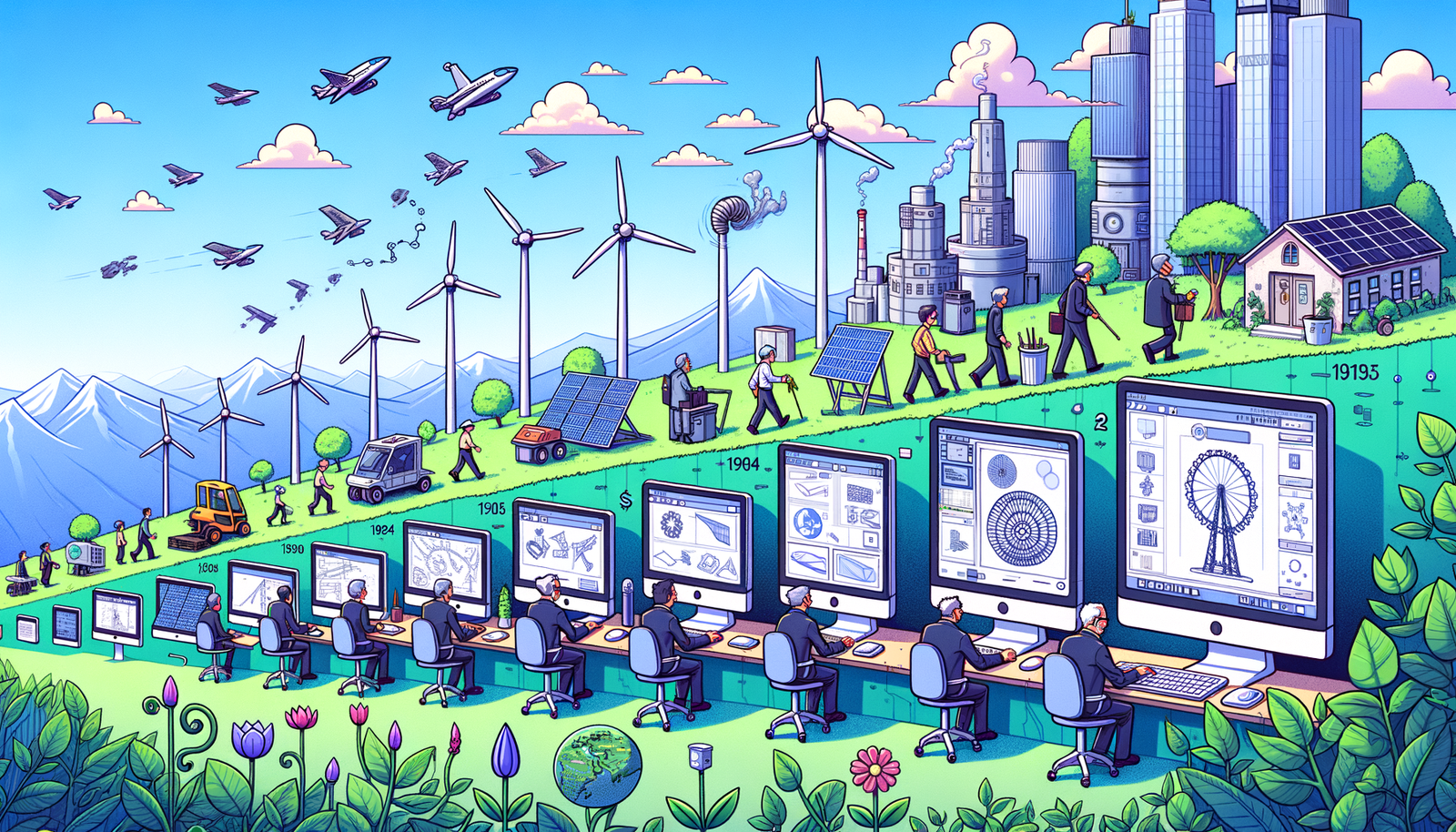


Introduction to Sustainable Engineering
Sustainable engineering is the practice of designing and operating systems in a way that uses energy and resources responsibly, minimizes environmental impact, and ensures that the needs of present and future generations are met. In today's context, where climate change and resource depletion are pressing global concerns, sustainable engineering has become more important than ever. The integration of environmental considerations into engineering practices not only addresses ecological issues but also promotes economic and social well-being. Over the years, engineers have recognized the necessity of shifting from traditional methods to more sustainable approaches, making sustainability a core aspect of modern engineering.
Historically, approaches to sustainability in engineering were often reactive, focusing on pollution control and remediation after environmental damage had occurred. Early efforts aimed at mitigating negative impacts rather than preventing them. However, as environmental awareness grew in the late 20th century, there was a significant shift towards proactive measures. Concepts like life cycle assessment (LCA) and eco-design emerged, emphasizing the importance of considering the environmental impact of products and systems from conception to disposal. This holistic perspective has led engineers to adopt more integrated strategies, embedding sustainability into every stage of the engineering process.
The role of design software in enhancing sustainability practices cannot be overstated. With the advancement of computational tools, engineers can now model, simulate, and analyze the environmental impacts of their designs with unprecedented accuracy. Design software enables the evaluation of various scenarios, optimization of resource use, and identification of potential issues before implementation. This not only saves time and costs but also leads to more environmentally friendly solutions. Companies like Autodesk and Bentley Systems have developed software platforms that incorporate sustainability metrics, allowing engineers to make informed decisions that align with environmental goals. By integrating sustainability into the design process through software tools, engineers are better equipped to create solutions that are efficient, effective, and eco-friendly.
The Evolution of Design Software for Sustainable Engineering
The evolution of design software has been instrumental in advancing sustainable engineering practices. Early computer-aided design (CAD) systems in the 1960s and 1970s were primarily focused on improving drafting efficiency, with little consideration for environmental factors. As computing power increased and environmental concerns intensified, design software began to incorporate features that addressed sustainability. A significant milestone was the introduction of energy analysis tools in the 1990s, which allowed engineers to simulate building performance and optimize energy consumption. Software like DOE-2 and EnergyPlus, developed by the U.S. Department of Energy, provided powerful capabilities for energy modeling, marking a turning point in sustainable design.
Key technological advancements have further facilitated eco-friendly design. The integration of LCA features into design software has enabled engineers to evaluate the environmental impacts of materials and processes throughout a product's lifespan. Some of the significant advancements include:
- Life Cycle Assessment (LCA) Tools: Allowing comprehensive analysis of environmental impacts from cradle to grave.
- Real-time Energy Analysis: Providing instant feedback on energy performance during the design phase.
- Material Databases: Offering extensive information on the environmental attributes of various materials.
- Building Information Modeling (BIM): Facilitating collaborative and integrated design approaches that consider sustainability.
These tools have made sustainable design more accessible and practical, allowing for optimization without sacrificing efficiency or aesthetics.
Notable software platforms have pioneered sustainable engineering by embedding environmental considerations into their core functionalities. Tally, developed by KieranTimberlake and Autodesk Sustainability Solutions, is an LCA application that works within Revit to provide instant environmental impact assessments of building materials. SolidWorks Sustainability integrates LCA into 3D CAD modeling, enabling product designers to evaluate and reduce the environmental footprint of their designs. Companies like Bentley Systems have also contributed to this evolution by offering comprehensive solutions for infrastructure design that prioritize sustainability. These platforms have empowered engineers and designers to make informed decisions that align with environmental objectives, setting new standards for sustainable engineering practices.
Future Trends and Challenges in Sustainable Engineering Software
As we look towards the future, emerging trends in design software are set to further support sustainability in engineering. One of the most significant developments is the integration of artificial intelligence (AI)-driven tools and generative design. These technologies enable software to automatically generate optimized design alternatives based on specific sustainability criteria. For instance, Autodesk's Generative Design uses AI algorithms to produce thousands of design options that meet predefined energy efficiency and material usage goals. This approach not only accelerates the design process but also uncovers innovative solutions that may not have been considered through traditional methods. Additionally, advancements in cloud computing and data analytics are enhancing the capabilities of design software, allowing for more complex simulations and real-time collaboration across global teams.
Despite these advancements, challenges remain in integrating sustainability metrics into engineering practices. Engineers often face obstacles such as:
- Complexity of Sustainability Data: Difficulty accessing accurate and up-to-date environmental data for materials and processes.
- Lack of Standardization: Inconsistencies in methodologies and metrics for measuring sustainability.
- User Adoption Barriers: Resistance to changing established workflows and lack of training in new tools.
- Interdisciplinary Coordination: Challenges in collaborating across different fields and stakeholders.
Overcoming these challenges requires not only technological solutions but also organizational change and education. There is a critical need for developing standardized sustainability metrics and methodologies to ensure consistency and reliability. Training programs and professional development opportunities can enhance user adoption by equipping engineers with the necessary skills to utilize advanced sustainability tools effectively. Furthermore, fostering a culture of innovation and openness to new technologies is essential for embracing these advancements.
The ongoing need for collaboration across disciplines is essential to enhance software capabilities for sustainable solutions. Sustainable engineering inherently involves multiple stakeholders, including engineers, architects, environmental scientists, and policymakers. Software developers must work closely with these stakeholders to ensure that tools meet the practical needs of users and address real-world environmental challenges. Initiatives like the BuildingSMART International aim to improve interoperability and data exchange between different software platforms, facilitating better collaboration. By fostering cross-disciplinary partnerships, the industry can develop more integrated and holistic tools that support sustainable outcomes. This collaborative approach is crucial for addressing the complex and interconnected issues associated with sustainability.
Conclusion
In summary, design software plays a pivotal role in promoting sustainable engineering. From its early beginnings focused on drafting efficiency to today's sophisticated tools that integrate energy analysis and life cycle assessment, software has evolved to become an essential component in the pursuit of sustainability. The ability to model, simulate, and optimize designs for environmental performance empowers engineers to make informed decisions that reduce ecological impact and promote resource efficiency. The ongoing evolution of tools and technologies, such as AI-driven design and cloud-based collaboration, continues to expand the possibilities for creating a sustainable future.
The impact of these advancements is profound, as they enable the development of solutions that address pressing global challenges like climate change, resource depletion, and environmental degradation. However, achieving these objectives requires continued innovation and adaptation in design software. It calls for the industry to embrace new technologies, overcome challenges related to data complexity and user adoption, and foster collaboration across disciplines. By doing so, engineers and designers can harness the full potential of software tools to meet global sustainability objectives and create a better world for future generations.
The journey towards sustainable engineering is an ongoing endeavor that demands commitment and cooperation from all stakeholders. As we move forward, it is imperative that the development and utilization of design software remain aligned with sustainability goals. This involves not only technological advancements but also education, policy support, and a cultural shift towards valuing environmental stewardship. By continuing to innovate and adapt, the engineering community can ensure that design software remains a powerful catalyst for positive change, driving the creation of sustainable solutions that benefit society and the planet.
Also in Design News


